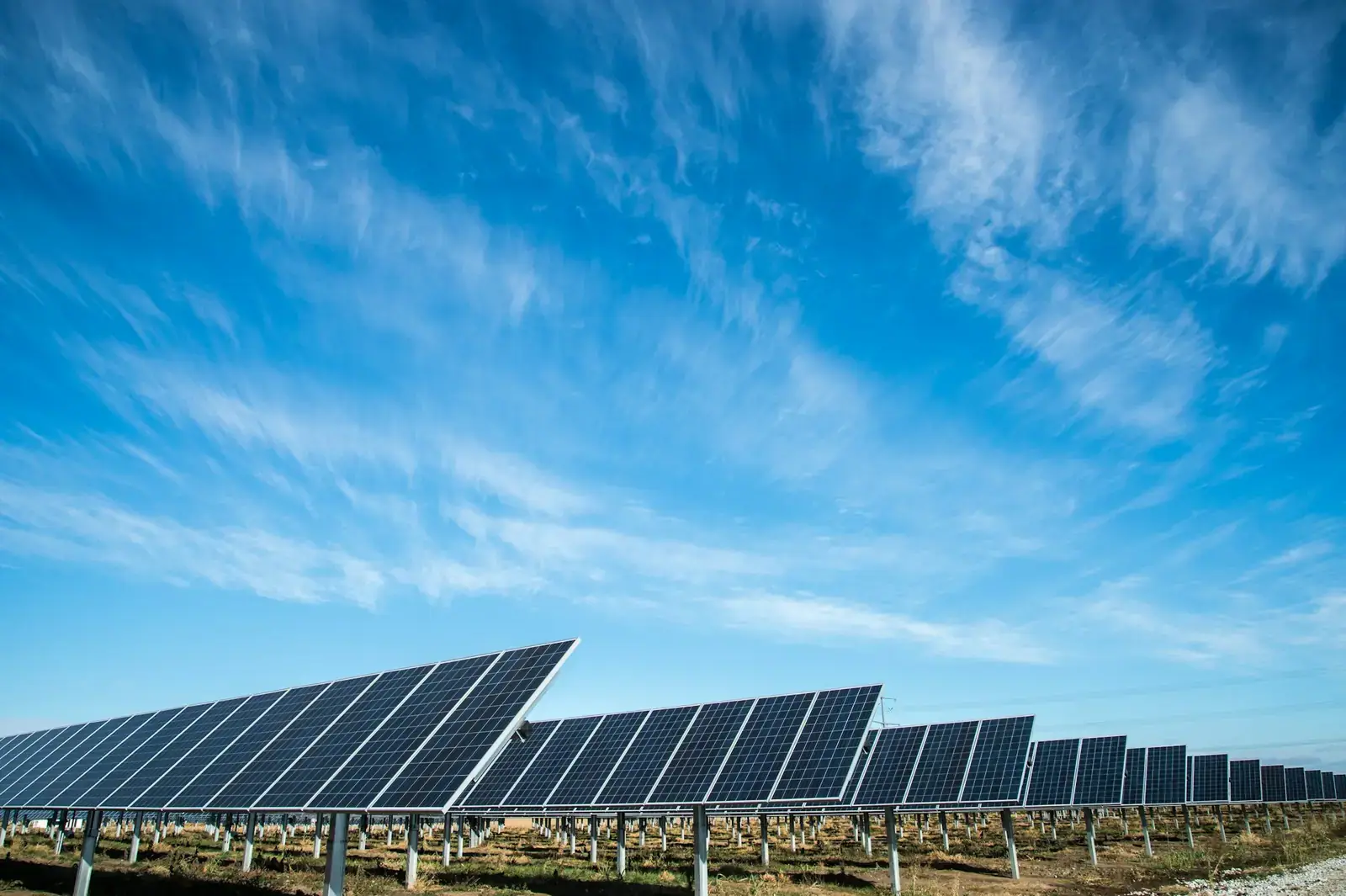
Most doubts about rooftop solar in Gujarat come from half-true stories passed between neighbours. The short version: solar works through the monsoon (just less), a normal on-grid system does not run during a power cut, and the subsidy depends on rules about panels and vendors, not just on paying for a bigger system. Here are nine common myths and what the official rules and data actually say.
Myths about how much power solar makes
Myth 1: "Solar is useless in the monsoon"
Solar output does drop in the monsoon, but it does not stop. Panels run on daylight, not only on direct sun. Estimates from PVGIS, the European Commission's solar calculator, put July and August output at around 2.5 to 3 units per kW per day in most of Gujarat. That compares with about 5.2 in February to April.
So the monsoon months give roughly half of the best months, and the other eight or nine months more than make up for it. The rain also washes off the summer dust for free. Our post on solar generation by season in Gujarat has the month-by-month numbers for Ahmedabad, Rajkot, Surat and Kutch.
Myth 2: "The hotter it is, the more power I get"
Sunlight makes the power, not heat. Solar panels actually lose some efficiency when they get very hot. That is part of why May, Gujarat's hottest month, comes out slightly lower than February to April in the PVGIS estimates. Cool, clear days in winter are often very productive.
Heat is not a reason to avoid solar in Gujarat. It just means that the "peak" months are not always the hottest ones, and that good airflow under the panels helps.
Myths about power cuts
Myth 3: "With solar, I will have power during load shedding"
Not with a normal on-grid system, which is what most homes install under PM Surya Ghar. MNRE's technical rules require these systems to have islanding protection: when the grid goes down, the inverter must switch off within a short time. This stops your panels from sending power into lines that linemen expect to be dead. The rule is in MNRE's operational guidelines for the scheme.
So during a power cut, an on-grid system stops too, even on a sunny afternoon. If backup matters to you, you need a hybrid system with batteries. Our post on on-grid vs hybrid vs off-grid solar explains the trade-offs.
Myths about the subsidy
Myth 4: "Any panel will get the subsidy"
This one can cost you the whole subsidy. Under PM Surya Ghar, the panels must meet the Domestic Content Requirement (DCR), meaning they are made in India using Indian-made cells. MNRE's guidelines say that using non-DCR modules "in any form" makes the installation ineligible. The panel model must also be on MNRE's ALMM list, and the work must be done by a vendor registered on the national portal.
Before you sign, ask for the exact panel make and model in writing and check it. Our post on DCR vs non-DCR panels and ALMM shows how.
Myth 5: "A bigger system means a bigger subsidy"
Only up to 3 kW. The subsidy for homes is ₹30,000 per kW for the first 2 kW and ₹18,000 for the third kW, so it tops out at ₹78,000. MNRE's guidelines say there is no extra subsidy for capacity beyond 3 kW. A 5 kW system still gets ₹78,000.
That does not mean you should stop at 3 kW. If your usage justifies a bigger system, size it for your usage. Just do not expect the subsidy to grow with it. Our PM Surya Ghar subsidy page covers the amounts and the steps.
Myth 6: "Muft Bijli means the government gives free electricity"
The name means free electricity from your own roof, not from the government. The scheme aims to help households get free or low-cost electricity of up to 300 units a month by installing rooftop solar. PIB's explainer on the scheme notes that a 3 kW system can make over 300 units a month on average.
Whether your bill actually drops to near zero depends on how many units you use, how much your system makes, and how net metering settles the difference. Your bill can still show some charges.
Myths about lifespan and upkeep
Myth 7: "Panels only last a few years"
Panels are built for the long term. MNRE's technical specifications under the scheme require panels to give more than 90% of their rated output during the first 10 years and more than 80% during the next 15 years. That is a 25-year horizon. The model net metering agreement in the same guidelines also runs for 25 years.
Inverters usually have shorter lives than panels. Ask your installer what warranty the inverter carries and keep the warranty card safe.
Myth 8: "Solar needs a lot of maintenance"
There are no moving parts on the roof. The main job is keeping the panels clean, which matters most in Gujarat's dusty dry months. Beyond that, an occasional check of wiring, earthing and the inverter display is usually enough.
The sample vendor-consumer agreement in MNRE's guidelines includes five years of full operation and maintenance by the vendor (including repairs and regular checks), and a 5-year system warranty from the date the DISCOM commissions it. Make sure your own agreement says this in writing.
Myths about paperwork
Myth 9: "The paperwork takes forever"
It used to be heavier. In January 2024, MNRE told DISCOMs not to ask applicants for documents beyond a set list, and Gujarat's state DISCOMs were instructed to follow it. Under a 2024 amendment to GERC's net metering regulations, a complete application for a home system up to 10 kW is deemed accepted without a technical feasibility study.
Most of the process now happens on the national portal, and a good installer does much of the uploading with you. You still need to keep your name consistent across the electricity bill, the application and the bank account.
Time is the other thing to watch. As of October 2026, the PM Surya Ghar portal says the scheme closes on 31 March 2027. Check the portal before you apply.
Next step
Pick the one doubt that has been holding you back, and check it against your own situation: your roof's shade, your last 12 bills, or whether you really need backup during power cuts. If you want, we can connect you with one checked installer near you who can answer your specific questions on site.
This guide is general information, not advice. Scheme rules and amounts change, so check the official portal or your DISCOM before you decide.