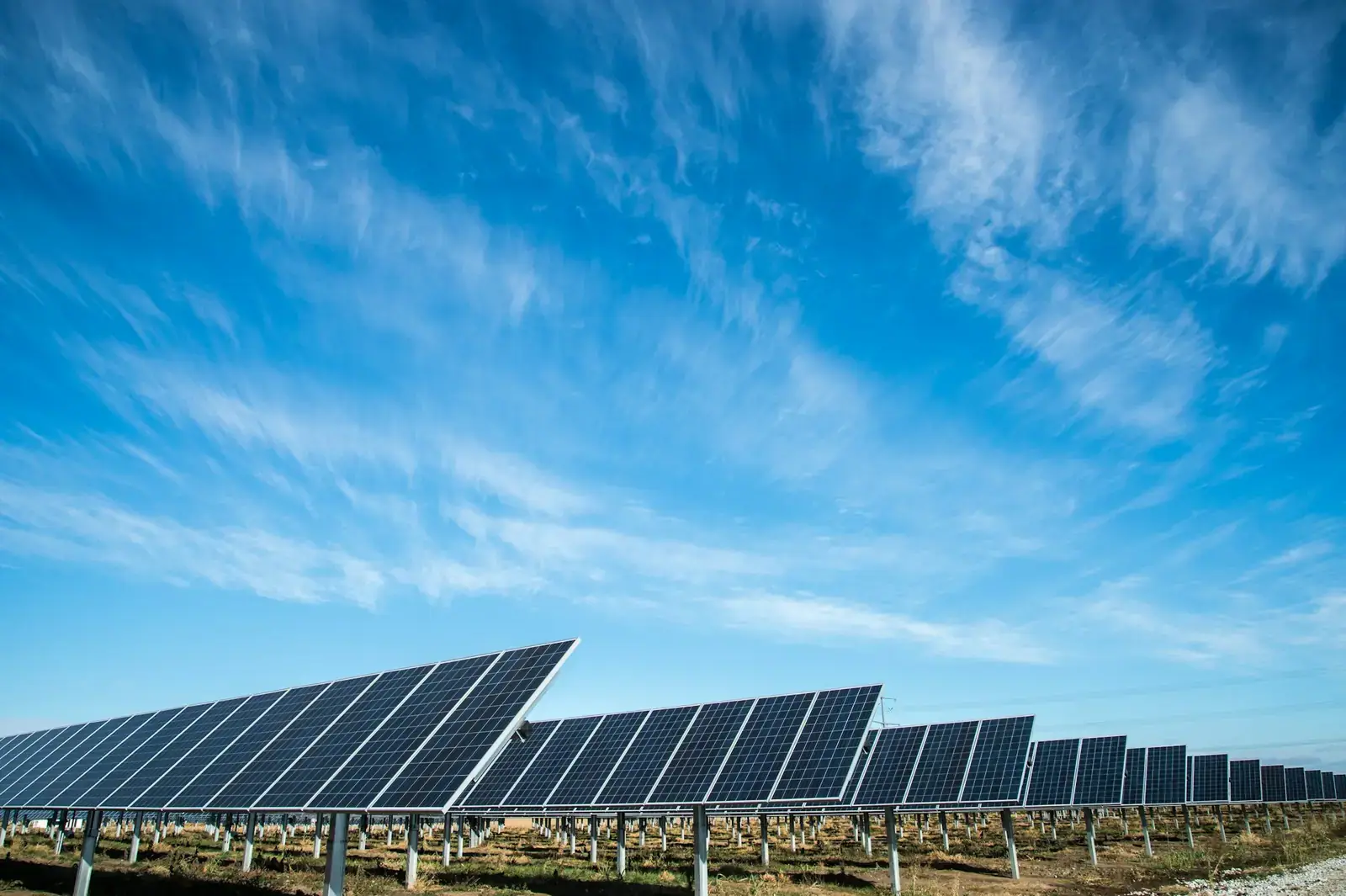
A housing society in Gujarat can put solar on its terrace to run the common meter: lifts, water pumps, corridor and campus lights, and EV charging. Under PM Surya Ghar, a society or residents' welfare association (RWA) gets a central subsidy of ₹18,000 per kW for this. The hard part is rarely the technology. It is getting the committee and members to agree, then following the steps in the right order.
This guide walks through that order, from the first committee discussion to the day the net meter goes in.
Why the common meter is the right place to start
Most societies pay a sizeable common bill every month, and that bill is shared by every member through maintenance. Lifts, borewell and overhead tank pumps, and campus lighting run every day, so a solar plant on the common connection gets used fully.
The common terrace usually belongs to everyone, which makes it awkward to give one flat owner a corner of it. A society plant on the common meter avoids that argument. Every member benefits through lower maintenance, not just the person who happens to live on the top floor.
If you live in a bungalow or row house society where each home has its own roof, individual systems on each house may suit you better. Our page on housing society solar has more on how society projects work.
The subsidy for societies, in plain words
The PM Surya Ghar scheme treats Group Housing Societies (GHS) and RWAs as a separate category. As listed on the national portal, pmsuryaghar.gov.in:
- ₹18,000 per kW for common facilities, including EV charging
- Up to 500 kW of capacity, counted at 3 kW per house
- The upper limit includes any individual rooftop plants that residents have already installed in that society
So the house count matters. A society with 40 flats can claim subsidy on up to 120 kW (40 x 3 kW) at most, minus any capacity members have already put up on their own. Many society terraces cannot fit anything close to that, so check your roof first. It may set the size before the cap does.
The subsidy is only for connections used for common facilities. A shop or office connection in the same complex does not qualify. Applications go through the national portal at pmsuryaghar.gov.in, and the vendor has to be registered there. As of October 2026, the portal says the scheme closes on 31 March 2027, so check the latest date there before the committee plans its timeline. For individual homes the rules are different, and our PM Surya Ghar subsidy page covers them.
Step 1: Get the committee and members on board
Start with numbers the members already understand. Pull the last 12 months of common electricity bills and note the monthly units, not just the rupee amount. That tells you how much solar the society could actually use.
Then put the idea to the managing committee. Most societies will need a resolution passed at a committee meeting or a general body meeting, depending on your bye-laws. The resolution should normally cover:
- Approval to install a rooftop solar plant on the common terrace
- Approval to apply for the PM Surya Ghar subsidy as a society
- Who is authorised to sign documents and deal with the installer and DISCOM
- How the society's share of the cost will be paid (reserve fund, one-time contribution, or a mix)
Check your own bye-laws or ask your society's legal adviser which body needs to approve it. Keep the signed minutes safe, because the installer and DISCOM may ask for them.
Step 2: Survey the terrace and size the system
Before anyone talks about capacity, the terrace needs a proper site visit. The installer should check:
- Shade-free area. Water tanks, lift machine rooms, staircase heads and mobile towers all cast shade. A rough planning figure from government sources is about 10 to 12 square metres of shade-free area per kW.
- Structure and waterproofing. Older terraces may need repair before panels go up. It is much easier to redo waterproofing first than to remove panels later.
- Access. Members still need to reach tanks and the lift room. Plan walkways and an elevated structure if needed.
- Load. Match the plant to the common meter's actual daytime and monthly use.
In most of Gujarat, a well placed system gives roughly 4 to 4.5 units per kW per day on average, a little more in Kutch and Saurashtra, and less in the south during monsoon. Treat that as a ballpark, not a promise. Our post on what size solar system you need explains how to work from your units.
Step 3: Choose one installer and check the paperwork
Get a written proposal that lists the panel make and wattage, inverter make, structure type, and warranty terms. For the subsidy, panels must be DCR (made with Indian cells) and on the government's ALMM list. Ask to see the installer's registration on the national portal.
Committees often invite many vendors and then struggle to compare them. It is usually easier to shortlist a small number, check each one's past society work locally, and visit one completed site. Ask the society secretary there how the paperwork went and whether the installer came back for service calls.
Before signing, agree in writing who handles the portal application, DISCOM paperwork, and net meter, and what happens if the subsidy is delayed.
Step 4: Application, installation and net meter
The usual sequence looks like this:
- The society's common connection is registered on the national portal with the consumer number from the bill.
- The DISCOM gives technical feasibility for the capacity.
- The installer puts up the structure, panels and inverter.
- The installer submits the completion details and the DISCOM installs a bi-directional net meter.
- The DISCOM inspects and commissions the system.
- The subsidy is paid into the society's bank account after commissioning.
Your DISCOM depends on where you are: UGVCL in north Gujarat, MGVCL in central Gujarat, DGVCL in south Gujarat, PGVCL in Saurashtra and Kutch, or Torrent Power in its licence areas. Timelines vary by DISCOM and season, so build some slack into what the committee tells members. Our post on net metering in Gujarat explains how the bill works after switch-on.
Some committees ask whether the solar units can be shared across more than one connection, through group net metering or virtual net metering. MNRE's PM Surya Ghar guidelines say such arrangements can get the subsidy if the installation is on a roof or terrace and the DISCOM approves the metering. In Gujarat, GERC has included both in its draft Grid Interactive Distributed Renewable Energy Sources Regulations, 2026, but on 17 October 2026 GERC's website still listed them as a draft. Until a final version is notified, plan for a normal net meter on the common connection, and ask your DISCOM whether any shared metering option is available for your society.
After switch-on: who looks after it
A society plant needs an owner on the committee, even if it is just one member who checks the inverter app once a week. Agree on:
- Cleaning. Dust builds up fast in Gujarat, especially before monsoon. Decide who cleans, how often, and with what water.
- Monitoring. Note the generation each month next to the common bill so members can see the result.
- Warranty contacts. Keep the installer's service number and warranty papers with the society records.
- Annual check. A yearly inspection of wiring, earthing and structure bolts is worth doing, especially in coastal areas that see strong winds.
Share the monthly units in the society WhatsApp group or notice board. It answers the "is it working?" question before anyone asks.
A practical next step
Pull your society's last 12 common electricity bills and put the monthly units in one sheet. Take that sheet, along with a rough idea of free terrace space, to the next committee meeting. That one page makes the first discussion far more concrete. If it helps, we can connect your society with one checked installer near you for a site survey.
This guide is general information, not advice. Scheme rules and amounts change, so check the official portal or your DISCOM before you decide.