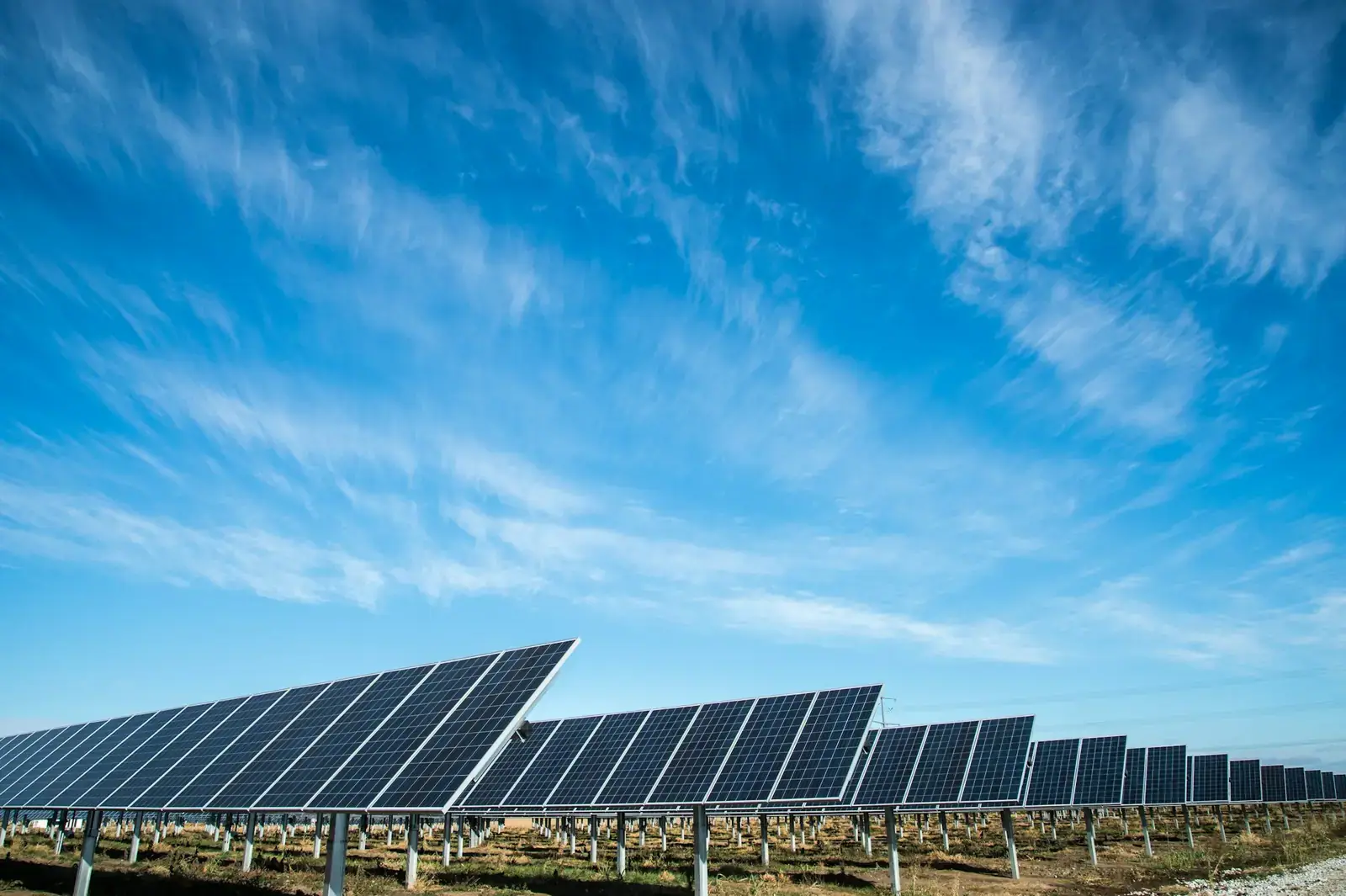
PM-KUSUM is the central government's scheme for solar on farms. It has three parts: small solar power plants on farmland (Component A), standalone solar pumps for farms without a grid connection (Component B), and solarising pumps that are already on the grid (Component C). In Gujarat, the state DISCOMs have used Component C to solarise whole agricultural feeders.
The scheme is also in a transition right now, so before you pay anyone or sign anything, it helps to know where things stand.
Where the scheme stands in late 2026
The original PM-KUSUM period ran up to 31 March 2026. What happens to projects after that date, and the rules of any next phase, had not appeared in an official notice we could find when we wrote this. So treat claims about deadline extensions or "new KUSUM subsidy rates" with caution until they appear on MNRE's PM-KUSUM page, the national PM-KUSUM portal or with your DISCOM.
What this means for a farmer: if you are already part of a sanctioned project, follow up with your DISCOM or implementing agency on timelines. If you are new, ask your DISCOM office whether applications are open in your area before spending money.
Component A: a small solar plant on your land
Component A lets farmers, groups of farmers, cooperatives, panchayats, Farmer Producer Organisations and water user associations set up grid-connected solar plants of 500 kW to 2 MW, usually on barren or fallow land. The DISCOM buys the power at a tariff set by the state electricity regulator.
If you do not have the money to build it yourself, a developer can build it on your land, and you receive lease rent as agreed with the developer. This is a long-term land decision, often for 25 years, so read the lease carefully and take advice before signing.
For most individual farmers, Component A is less relevant than B or C. It suits those with several acres of unused land close to a substation. Our page on ground-mounted solar covers how land-based plants are planned.
Component B: standalone solar pumps
Component B is for farmers who do not have a grid connection for their pump. It supports standalone solar pumps of up to 7.5 HP. Under the MNRE scheme design for most states, including Gujarat:
| Share | Who pays |
|---|---|
| 30% | Central government (of the benchmark or tender cost, whichever is lower) |
| At least 30% | State government |
| Up to 40% | Farmer (bank loans can cover much of this) |
MNRE's own scheme page says that with bank finance, the farmer may need to pay only about 10% upfront and borrow the rest. Special category states (north-eastern states, hill states and islands) get 50% central support, but Gujarat is not in that list.
A standalone pump runs only when the sun is up. Pumping is strongest from late morning to mid-afternoon and drops on cloudy days. That suits drip and sprinkler systems and storage in a farm pond or tank. Our page on solar water pumps has more on how they work.
Component C: solarising grid-connected pumps
Many farm pumps in Gujarat are already on the grid, so Component C matters a lot here. It has two routes.
Individual pump solarisation
You keep your grid connection and add solar panels to your existing pump, up to 7.5 HP. The solar capacity can be up to twice the pump's rating in kW. Any surplus power, for example on days you do not irrigate, can be sold to the DISCOM at a rate approved by the regulator. Central support follows the same 30% pattern as Component B for the solar part.
Feeder level solarisation
Here the farmer does not install anything. The DISCOM or a developer builds a solar plant sized to the agricultural load of a whole feeder, and farmers on that feeder get daytime power for irrigation. Gujarat's state DISCOMs have tendered this under Component C. For example, PGVCL invited bids for 921 MW to solarise 11 kV feeders in 2023, and DGVCL awarded 160 MW covering 514 agricultural feeders in January 2025, according to trade press reports. So you may hear about KUSUM through your feeder rather than through an individual application.
If your feeder is being solarised, you do not install anything yourself for that part. Your local DISCOM sub-division office is the right place to ask.
Rules that protect you
A few points apply whichever component you look at:
- Use only official channels. MNRE has issued public warnings more than once about fake websites that collect "registration fees" for PM-KUSUM. Do not pay anyone through a website, WhatsApp link or agent you cannot verify. Your share is deposited through the state implementing agency, not to a random account.
- Approved equipment. Panels for government schemes need to meet domestic content (DCR) and ALMM rules. Our post on DCR vs non-DCR panels and ALMM explains what those mean.
- Land and pump papers. Keep your 7/12 extract, existing electricity connection details (for Component C) and bank details ready. The exact list depends on the call for applications.
- Pump size. Central support is capped at 7.5 HP. You can sometimes install a bigger pump, but the support is still limited to the 7.5 HP level.
Is a private farm solar system an option?
Some farmers do not want to wait for a scheme window, or have needs the scheme does not cover, such as solar for a farmhouse, cold storage or a processing shed. In that case a private grid-connected or off-grid system is possible, but there is no KUSUM subsidy on it.
For anything tied to irrigation, check the KUSUM route with your DISCOM first, because the central and state support is significant.
A practical next step
Visit your DISCOM sub-division office with your electricity bill or connection details and ask three questions: is my feeder covered under feeder solarisation, are individual applications open under Component B or C, and which official portal should I use. Note the answers and the date. If you later need a private system for a farmhouse or shed, we can connect you with one checked installer near you.
This guide is general information, not advice. Scheme rules and amounts change, so check the official portal or your DISCOM before you decide.